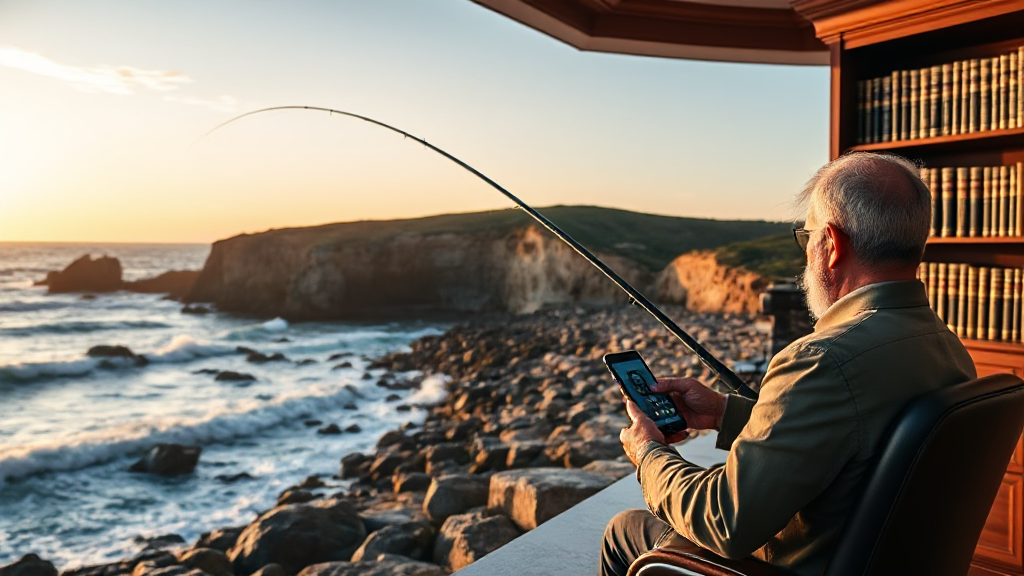
Salt on the Wind: What a Legal Day of Portugal Fishing Sounds and Feels Like
The gulls wake before the anglers do. Their cries bounce off the cliffs somewhere south of Lisbon, thin and sharp, and then comes the other sound — the soft, mechanical click of a reel handle turning, line peeling off the spool as a lead weight drops toward the Atlantic. It is a sound that has been repeated along this coast for centuries, and it never quite sounds the same twice. What most visitors never notice is the quiet paperwork behind the moment: the small, unglamorous detail that lets a morning like this happen without a fine, a confiscated rod, or an awkward conversation with a maritime officer. That detail is a portugal fishing licence, and once it is sorted, the day belongs entirely to the sea.
Before First Light: The Smell of Coffee and Cold Rock
Long before the sun lifts over the horizon, the Portuguese coast has a particular smell. It is coffee from a thermos, diesel from a fisherman’s van, and the mineral coldness of wet basalt underfoot. Anglers arrive in ones and twos, headlamps bobbing, choosing their spot along a rocky shore where the swell folds white against the stone. Nobody speaks much. The ritual is familiar: rod sections twisted together, guides checked, a hook tied by feel as much as by sight.
This is the hour when the paperwork matters most, because it is the hour when nobody wants to think about it. A recreational sea angler in mainland Portugal needs a valid licence issued through DGRM, the national directorate responsible for maritime and fishery matters. Getting one used to mean navigating a government portal, sometimes with a Portuguese tax number in hand. Today, services exist that streamline that step, so the pre-dawn hours can be spent on knots and bait rather than forms. The application takes around three minutes, needs no NIF, and accepts card, Apple Pay, or Google Pay — a small modern convenience wrapped around an old, patient pursuit.
By the time the first grey light seeps into the water, the coast has filled with silhouettes. A man in a faded fleece casts toward a gap between two rocks. A woman baits a hook with squid, fingers quick and practiced. The sea breathes in and out against the shore, and somewhere out beyond the breakers, something is moving.
Mid-Morning: The Copper Light and the First Strike
Around nine o’clock, the light turns a warm copper colour and the water shifts from ink to glass-green. This is when the coast of Portugal shows its range. In the north, near Viana do Castelo, granite and Atlantic spray dominate; further south, around the Algarve, honey-coloured cliffs drop into water so clear you can watch your bait sink. The species change with the latitude too — bass and bream in the cooler north, sea bass, gilt-head bream, and the occasional mackerel shoal almost anywhere.
The first strike is rarely dramatic. It is a tap, a hesitation, a slight weight that was not there a second ago. Then the rod tip dips, and the reel begins to sing. That sound — line stripping out under tension — is the reason many people plan entire holidays around this coastline. It is also the reason so many of them make sure their fishing license is in order before they book the flight, because the alternative is watching from the car park.
Mid-morning is also when the social side of Portuguese shore fishing appears. Locals nod at visitors. Someone shares a spare swivel. A retired man explains, in a mix of Portuguese and gesture, where the rocks drop away and where the sandbank ends. The atmosphere is generous, unhurried, and entirely dependent on everyone being there legally. Enforcement along the coast is real, and inspectors do walk the breakwaters. A licence is not a bureaucratic nuisance; it is the ticket that keeps the morning friendly.
Noon: Heat, Haze, and the Practical Pause
By midday the heat arrives, and the coast changes character again. The rocks radiate warmth. The air smells of salt and dry thyme. Most anglers retreat to shade, a café, or the back of a van with the doors open, and this is the natural pause in the day.
It is also the moment when the practical questions surface. Is my licence still valid? Does it cover the species I am targeting? Am I fishing in an area where recreational angling is permitted? Portugal divides its waters carefully, and rules differ between the mainland coast, estuaries, and protected zones. Knowing the basics saves trouble: recreational sea fishing is for personal consumption, not sale; bag limits exist; and some species have minimum sizes that are enforced.
For anyone still sorting out the formalities, the modern route is refreshingly simple. Instead of hunting through unfamiliar government pages, an angler can complete the DGRM recreational sea fishing licence application online in a few minutes, pay by card or mobile wallet, and carry the confirmation on a phone. That last part matters on a sunny breakwater where there is no printer and no signal for a detour into town. The point is not the technology itself — it is that the technology disappears, leaving only the fishing.
Lunch, for those who stay, is often whatever the sea provided the day before, grilled somewhere nearby with olive oil and lemon. The haze over the water softens the horizon. Gulls drift. The line waits.
Late Afternoon: Golden Hour and the Second Wind
Around five o’clock, the light turns gold and the wind usually drops. This is the second window, the one experienced anglers plan around. Fish become active again as the water cools, and the coast fills with a different kind of sound: families on the sand, dogs barking, the clink of a bucket, the whir of a reel being cranked faster than before.
Casting from a rocky shore at this hour is a sensory experience that is hard to describe to anyone who has not done it. The rod loads and springs. The line hisses through the guides. The bait lands with a small, satisfying splash, and then everything goes quiet except the sea. Watching the tip of the rod against a sky turning pink and violet, it is easy to forget that this entire scene rests on a legal foundation — that fishing in portugal is regulated, and that the regulation is what keeps the coastline healthy for the next person standing here.
This is also when the day’s best stories get told. A bream that fought like something twice its size. A cast that landed exactly where the rocks opened. A line that snapped, and the laughter that followed. Nobody mentions the licence, because by now it is simply part of the background — like the tide, the gulls, and the smell of salt on warm stone.
Dusk: The Last Cast and the Long Walk Back
As the sun touches the water, the coast turns silver and then blue. The last cast is usually optimistic rather than strategic, a final hopeful arc into the fading light. Then the rod comes down, the tackle is packed, and the walk back begins over rocks that are suddenly slippery and unfamiliar in the dark.
The sounds change with the light. The gulls quiet. The waves seem louder. Somewhere behind the cliffs, a village switches on its streetlights, and the smell of grilled fish drifts down to the shore. Anglers compare notes in the car park, then drift away toward showers and dinner.
What remains is a particular kind of satisfaction — not just the catch, but the day itself, lived slowly and by the rhythm of the tide. And underneath it, unspoken and unremarkable, is the quiet assurance that everything was done properly. A licence obtained in minutes. A coast respected. A morning that began with the sound of line peeling off a reel and ended with the same sound, softer now, in the dark.
Planning Your Own Portuguese Coast Day
If the atmosphere described here appeals to you, the practical preparation is simpler than most people expect. Choose your stretch of coast — the wild north, the central cliffs near Peniche and Ericeira, or the warmer Algarve — and match your tackle and timing to the season. Spring and autumn tend to offer the most comfortable conditions, though summer evenings along the Atlantic can be superb.
Then handle the one detail that makes the rest possible. Sort out your recreational sea fishing licence for mainland Portugal before you travel, keep the confirmation on your phone, and carry identification. Respect local rules on size, bag limits, and protected areas. Fish for your own table, not for sale. Leave the rocks as you found them.
Do all that, and the day will unfold the way it should: gulls at first light, coffee in the cold air, a rod bending against something silver in the green water, and the long golden hour that makes the whole coast glow. The paperwork will be the least memorable part of the trip — which is exactly what it should be.